Prepping for Your Pet Sitter (So You Can Travel Worry-Free)

There’s nothing like the warm comfort of knowing your pets are in safe, loving hands while you’re away. A little preparation can turn that comfort into confidence. Here are four heartfelt and practical steps to ready your home and routine before your sitter arrives.
If you're working with us, most (if not all) of these steps are already wrapped into our Pet Questionnaires and Sitter Agreements.
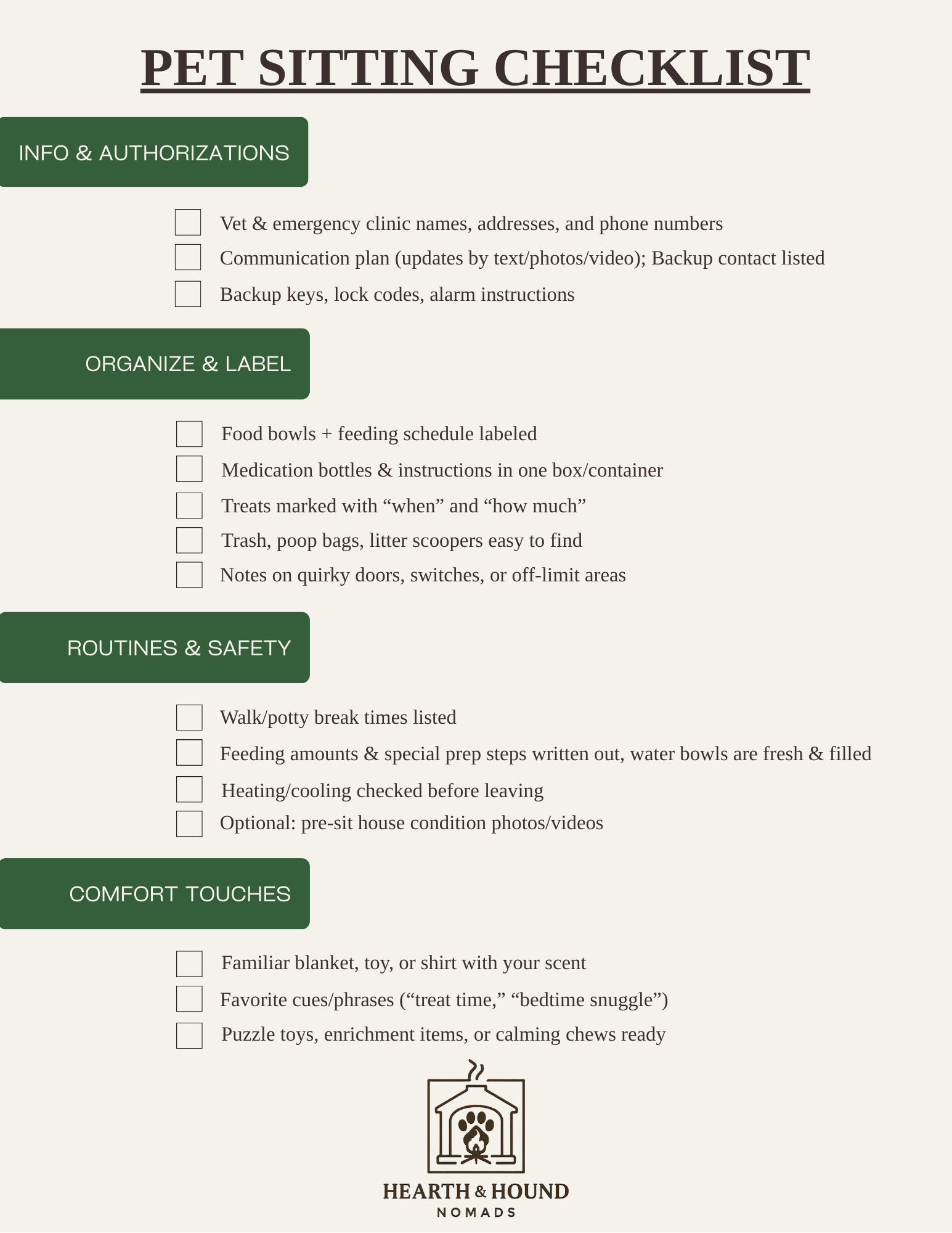
1. Share Clear Information & Authorizations
One of the biggest sources of tension is ambiguity. Before the sitter steps in, make sure they have everything they need, crystal clear. Our agreements emphasize that clarity helps avoid surprises for the sitter, the owner, and your pets.
- Emergency & veterinary release: Provide a signed authorization that allows your sitter to seek medical care if necessary. Be sure to include a spending limit—anything above that, they’ll call you first.
- Payment & reimbursement direction: If your sitter needs to purchase supplies (food, litter, urgent fixes), give them a clear method (credit card, pre-funded amount, app) ahead of time.
- Communication plan: Let them know how often and by what means you want updates (text, photos, video). Also, provide a backup contact in case you can’t be reached.
- Home access details: Leave backup keys, lock codes, and any alarm instructions. It’s thoughtful to label them or include a little map or guide so nothing is cryptic.
When your sitter arrives, you can even ask them to do a quick timestamped video walkthrough of your home’s condition, this gives both of you peace of mind.
2. Organize, Label & Simplify
Imagine stepping into your home as a sitter. What would make your life easier? A tidy, organized, labeled space.
- Pet zones: Mark food bowls, treats, meds, toys, and beds. Use labels like “Breakfast & Dinner: 8 am / 5 pm,” “Medicine: after meals,” or “Treats: reward only.”
- Medication & supplies box: Bundle your pet’s meds, syringes, pill pockets, etc., into one container. Include a printed or handwritten schedule with names, doses, and times.
- Trash & cleanup stations: Place trash bins or poop bags in obvious spots. If the sitter needs to clean litter boxes or pick up yard waste, make the tools easy to find.
- House quirks guide: If certain doors stick, lights are finicky, or certain rooms are off-limits, write a little post-it note or include in your “sit packet.”
When everything has a place and a name, your sitter won’t be fumbling or guessing and your pets get smoother, more consistent care.

3. Set Up Comfortable Routines + Safety Checks
Part of feeling cozy is routine. The more familiar things are, the less stress on your pets, and your sitter.
- Walk & bathroom schedule: Provide your sitter with your pet’s usual potty breaks and walking windows.
- Feeding instructions: Amounts, times, special handling (wet food, raw, kibble + topper), and how to clean bowls.
- Emergency & local vet info: Leave the name, address, and phone of your regular vet and the nearest 24/7 emergency clinic.
- Home utility check: Confirm that heating, cooling, water, internet, and appliances are on and working. You can snap photos or short video proof ahead of time to share.
- Pre-sit house condition record: Before leaving, photograph or video each room (with damage or condition clearly shown). Ask your sitter to do a timestamped check-in when they arrive so both sides have documentation.
These little rituals anchor your sitter into your home’s rhythm, making transitions quieter and more gentle.
4. Leave Comfort Touches & Pet-Person Feelings
The goal is that your pets feel safe and your sitter feels welcome. Some small thoughtful touches go a long way.
- Familiar smells: Leave a blanket, toy, or your worn (clean) shirt so your scent is present.
- Favorite behaviors or cues: If your pet responds to a special treat phrase, or likes “snuggle time before bed,” write that in.
- Entertainment & comfort items: Know where the treats, puzzle toys, or cozy beds are and leave instructions.
- Backup plans: Provide a second person (friend, neighbor) the sitter can contact if something feels off or if an emergency arises.
These touches turn a “sit” into something warm and loving rather than simply utilitarian.
✨ Final Thought
When a pet sitter walks into your home, you want them to feel as if they’ve stepped into a space that’s already been well-prepared with care, clarity, and kindness. These four steps, sharing clear authorizations, organizing with labels, setting up routines and safety checks, and adding cozy touches, give your sitter confidence, your pets comfort, and you peace of mind.
Want a printable checklist to use? Here's a download!




Comments ()